



Langreo (Spain) demonstrator of the EU-co-funded GINNGER project is integrating a digital forecasting module in its heating network to optimise energy consumption. The progress was presented to locals on 24 February and a co-creation session was held, too, gathering the perceptions of the actors involved regarding possible improvements.
The GINNGER project continues to implement pioneering renovation measures in residential district in Langreo (Spain) in efforts to make it more energy efficient. This is taking shape through a district heating network based on renewable energies (geothermal and biomass), linked to the Fondón District Heating Network.
One of the renovation’s central elements is the integration of a digital solution – the forecasting module – developed by CERTH, in the heating network. This will optimise the system’s energy management. The tool combines historical consumption data, weather forecasts, and seasonal variables to estimate daily energy demand. This facilitates the balance between energy generation and consumption and reinforces the network’s operational efficiency.
“With this action, GINNGER is advancing in the integration of renewable energy infrastructure and smart digital solutions in Langreo” – stated Covadonga Cima, Project Manager from CTIC Centro Tecnológico – “This renovation plan consolidates an urban regeneration model aligned with the European objectives of sustainability and climate neutrality”.
The progressive connection of buildings to the district heating network powered by renewable sources consolidates a strategic infrastructure for the decarbonisation of the municipality and it improves the energy efficiency in the urban environment.
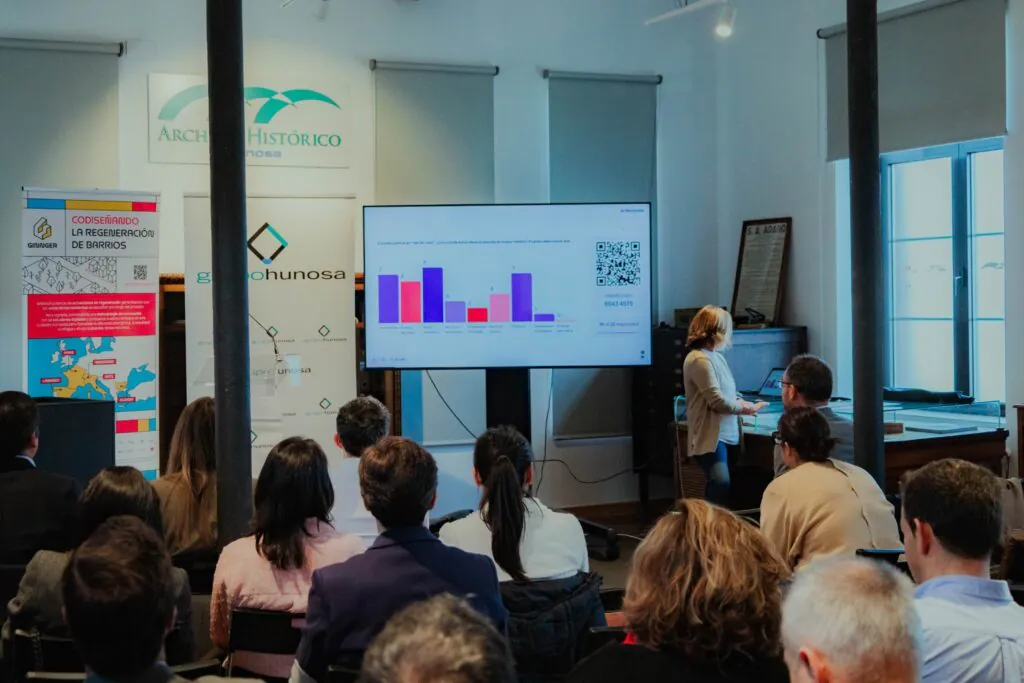
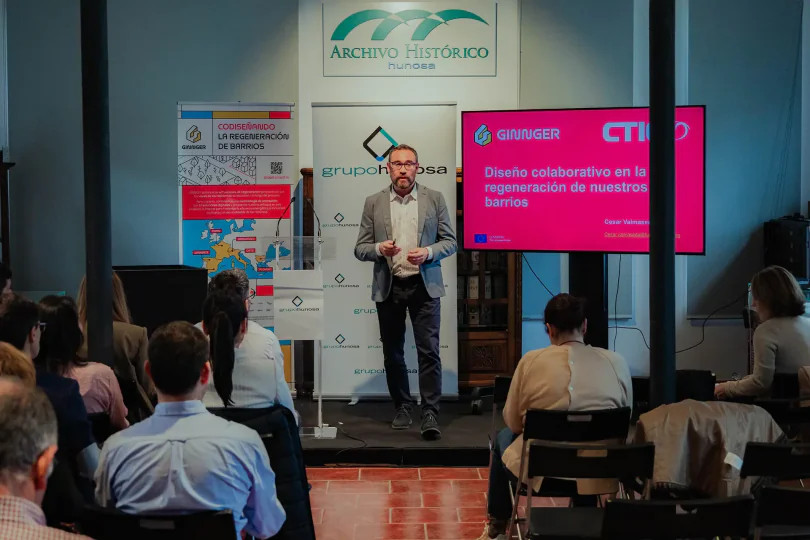
The status of the Langreo’s neighbourhood regeneration action was presented in a working session at Pozo Fondón (HUNOSA facility) on 24 February 2026. The event was hosted by HUNOSA, with CTIC and the Cruz de los Ángeles Foundation (FCA) as co-hosts. The event was also attended by the other GINNGER’s team members involved in the Langreo pilot project: FAEN, VIPASA, and Langreo City Council.
The collaborative session included 30 local professionals from different fields —institutional, energy, technical, and academic— aimed at analysing the territorial impact of the heating network. Attendees were asked to identify barriers to its consolidation, and exploring complementary measures that reinforce its contribution to the local energy transition. The co-creation activity allowed sharing views on the positive impacts on citizens and possible improvements, as well as understanding their level of satisfaction.
The advantages identified included reduced emissions, savings in energy costs and energy independence. Some of the challenges mentioned were investment costs, technical complexity, administrative barriers and lack of knowledge about the technology.
Local professionals also discussed the level of involvement of different actors in promoting new heating networks, and they shared ideas on possible complementary measures to decarbonise heating in the residential and services sectors. All workshop outcomes were collected and are going to be used by local GINNGER’s partners for the Langreo demonstrator’s improvements.